|
HDK
|
#include <rendererPlugin.h>
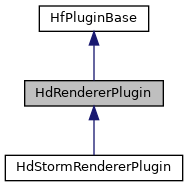
 Inheritance diagram for HdRendererPlugin:
Public Member Functions | |
| HD_API TfToken | GetPluginId () const |
| HD_API std::string | GetDisplayName () const |
| virtual HD_API bool | IsSupported (bool gpuEnabled=true) const |
Hydra 2.0 API | |
| virtual HD_API bool | IsSupported (HdContainerDataSourceHandle const &rendererCreateArgs, std::string *reasonWhyNot=nullptr) const |
| virtual HD_API HdContainerDataSourceHandle | GetSceneIndexInputArgs () const |
| HD_API HdPluginRendererUniqueHandle | CreateRenderer (HdSceneIndexBaseRefPtr const &sceneIndex, HdContainerDataSourceHandle const &rendererCreateArgs) |
Hydra 1.0 API | |
| virtual bool | IsSupported (HdRendererCreateArgs const &rendererCreateArgs, std::string *reasonWhyNot=nullptr) const =0 |
| HD_API HdPluginRenderDelegateUniqueHandle | CreateDelegate (HdRenderSettingsMap const &settingsMap={}) |
| virtual HdRenderDelegate * | CreateRenderDelegate ()=0 |
| virtual HD_API HdRenderDelegate * | CreateRenderDelegate (HdRenderSettingsMap const &settingsMap) |
| virtual void | DeleteRenderDelegate (HdRenderDelegate *renderDelegate)=0 |
| Public Member Functions inherited from HfPluginBase | |
| virtual HF_API | ~HfPluginBase () |
Protected Member Functions | |
| HdRendererPlugin ()=default | |
| HD_API | ~HdRendererPlugin () override |
| virtual HD_API std::unique_ptr < HdRenderer > | _CreateRenderer (HdSceneIndexBaseRefPtr const &sceneIndex, HdContainerDataSourceHandle const &rendererCreateArgs) |
| HD_API std::unique_ptr < HdRenderer > | _CreateRendererFromRenderDelegate (HdSceneIndexBaseRefPtr const &sceneIndex, HdContainerDataSourceHandle const &rendererCreateArgs) |
| Protected Member Functions inherited from HfPluginBase | |
| HF_API | HfPluginBase ()=default |
This class defines a renderer plugin interface for Hydra. A renderer plugin is a dynamically discovered and loaded at run-time using the Plug system.
This object has singleton behavior, in that is instantiated once per library (managed by the plugin registry).
The class is used to factory objects that provide delegate support to other parts of the Hydra Ecosystem.
Definition at line 34 of file rendererPlugin.h.
|
protecteddefault |
|
overrideprotected |
|
protectedvirtual |
|
protected |
| HD_API HdPluginRenderDelegateUniqueHandle HdRendererPlugin::CreateDelegate | ( | HdRenderSettingsMap const & | settingsMap = {} | ) |
Create a render delegate through the plugin and wrap it in a handle that keeps this plugin alive until render delegate is destroyed. Initial settings can be passed in.
|
pure virtual |
Clients should use CreateDelegate since this method will eventually become protected, use CreateRenderDelegateHandle instead.
Factory a Render Delegate object, that Hydra can use to factory prims and communicate with a renderer.
Implemented in HdStormRendererPlugin.
|
virtual |
Clients should use CreateDelegate since this method will eventually become protected.
Factory a Render Delegate object, that Hydra can use to factory prims and communicate with a renderer. Pass in initial settings...
Reimplemented in HdStormRendererPlugin.
| HD_API HdPluginRendererUniqueHandle HdRendererPlugin::CreateRenderer | ( | HdSceneIndexBaseRefPtr const & | sceneIndex, |
| HdContainerDataSourceHandle const & | rendererCreateArgs | ||
| ) |
Create renderer through the plugin and wrap it in a handle that keeps this plugin alive until the renderer is destroyed.
The renderer is populated from the given scene index. rendererCreateArgs should conform to HdRendererCreateArgsSchema.
Note that for a seamless transition, this Hydra 2.0 method falls back to creating a Hydra 1.0 render delegate and the necessary "back-end" emulation for render plugins that do not implement the Hydra 2.0 _CreateRenderer.
|
pure virtual |
Clients should use CreateDelegate since this method will eventually become protected.
Release the object factoried by CreateRenderDelegate().
Implemented in HdStormRendererPlugin.
| HD_API std::string HdRendererPlugin::GetDisplayName | ( | ) | const |
Look-up display name in plugin registry.
|
virtual |
Arguments that an application should pass as input arguments to scene indices so that they can be configured for the needs of the renderer.
Follows the HdSceneIndexInputArgsSchema but can have data sources at additional data sources.
Example: Some scene indices are computing samples for motion blur non-lazy and need to know whether the renderer supports motion blur in advance.
Example: the configuration of the HdRenderIndexAdapterSceneIndex used by the legacy UsdImagingDelegate which needs the preference order of the material render contexts since it is resolving which material network to use rather than leaving it to a renderer- specific plugin scene index.
Reimplemented in HdStormRendererPlugin.
|
virtual |
Returns true if this renderer plugin is supported in the running process and false if not.
This gives the plugin a chance to perform some runtime checks to make sure that the system meets minimum requirements. The rendererCreateArgs parameter should conform to HdRendererCreateArgsSchema to indicate the resources available when making this determination.
The reasonWhyNot param, when provided, can be filled with the reason why the renderer plugin is not supported.
|
pure virtual |
Returns true if this renderer plugin is supported in the running process and false if not.
This gives the plugin a chance to perform some runtime checks to make sure that the system meets minimum requirements. The rendererCreateArgs parameter indicates the resources available when making this determination.
The reasonWhyNot param, when provided, can be filled with the reason why the renderer plugin is not supported.
Implemented in HdStormRendererPlugin.
|
virtual |
Returns true if this renderer plugin is supported in the running process and false if not.
This gives the plugin a chance to perform some runtime checks to make sure that the system meets minimum requirements. The gpuEnabled parameter indicates if the GPU is available for use by the plugin in case this information is necessary to make this determination.
 1.8.6
1.8.6